Fall Home Maintenance Checklist: 14 Things Before Winter
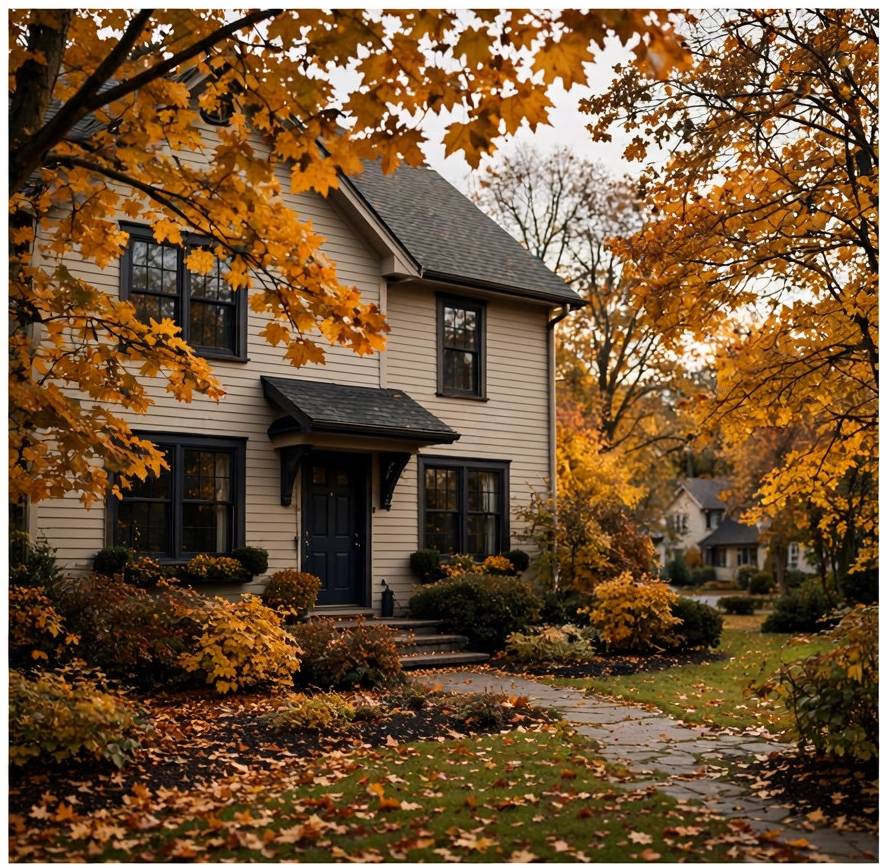
Winter problems usually announce themselves in fall: a weak seal, a blocked gutter, an exposed hose bib. A focused walk-through now can prevent a cold-weather emergency later.
Winter is the most expensive season to discover a problem with your house. A clogged gutter becomes an ice dam. A dirty furnace filter becomes a $400 emergency service call on the coldest Saturday of January.
Fall maintenance is spending a few weekend hours now so winter cannot send you a bill with three extra digits. Everything on this list costs less than $100. Most of it costs nothing but time.
Outside the house
1. Clean the gutters
Full gutters overflow, and overflowing water soaks into the roof edge, the siding, and eventually the foundation. In freezing weather, trapped water becomes ice dams that lift shingles and leak into the attic. Scoop the leaves with a gloved hand, flush the downspouts with a garden hose, and check that water runs at least 4 feet away from the foundation. Ladder safety: keep three points of contact, never lean past the rails, and have someone foot the ladder. A pro gutter cleaning runs $100 to $250. Water damage repair runs $500 to $3,000.
2. Inspect the roof from the ground
You do not need to climb up. Stand across the street with binoculars and look for missing, cracked, or curling shingles and damaged flashing around the chimney. If you spot damage, a pro inspection runs $150 to $300, and catching a bad shingle in October costs a $200 patch instead of a $2,000 leak repair in February.
3. Schedule a chimney sweep
If you burn wood, creosote buildup in the chimney is a genuine fire hazard, and it accumulates fast. A certified chimney sweep costs $100 to $250 a year and inspects for cracks, blockages, and animal nests while they are up there. Book in early fall, because sweeps fill up by November.
4. Shut down the outdoor water
Frozen pipes burst, and outdoor faucets are the most exposed pipes in the house. Shut off the interior valve for each exterior spigot, open the outside faucet to let it drain, and disconnect every garden hose before storing them. A hose left connected traps water in the faucet, which freezes, expands, and cracks the pipe inside your wall. Burst pipe repair costs $150 to $500, plus whatever the water damages.
5. Winterize the sprinklers
If you have an in-ground sprinkler system, the lines need to be blown out with compressed air before the first hard freeze. A pro blowout service runs $75 to $150 and takes about 30 minutes. One frozen manifold costs more to replace than five years of blowouts.
Heat and air
6. Change the furnace filter and book a tune-up
A clogged filter makes your furnace work harder, burn more fuel, and wear out faster. Filters cost $10 to $20 for a multipack and take two minutes to swap. Change them every one to three months during heating season, more often if you have pets. While you are at it, book a furnace tune-up for $80 to $150. The tech checks the heat exchanger for cracks (carbon monoxide risk), cleans the burners, and catches the failing part now instead of during a blizzard. Emergency furnace calls start around $200 just for the visit, plus weekend surcharges.
7. Seal the air leaks
The Department of Energy estimates that air leaks waste 25 to 40 percent of the energy used for heating and cooling a typical home. You can find the worst leaks with the back of your hand on a windy day: check around windows, doors, electrical outlets on exterior walls, and anywhere pipes enter the house. An $8 to $12 tube of exterior caulk seals most gaps, and a tube covers roughly 50 linear feet. Takes 20 minutes per window. This is the single best dollar-for-dollar energy project in homeownership.
8. Weatherstrip the doors
Adhesive foam weatherstripping costs $5 to $15 per door and installs in 15 minutes: clean the frame, peel the backing, press it into place. One drafty door can cost $50 to $100 in extra heating over a winter.
9. Reverse the ceiling fans
Most ceiling fans have a small switch on the motor housing. Flip it so the fan runs clockwise on low speed in winter. Clockwise rotation pushes the warm air that collects at the ceiling back down into the room. It takes 10 seconds, costs nothing, and lets you drop the thermostat a degree or two.
10. Check the attic insulation
Heat rises, and thin attic insulation lets it rise right through the roof. Pop your head into the attic and look: you want insulation roughly 12 to 14 inches deep, about R-38, for most climates. If you can see the tops of the ceiling joists, you do not have enough. Adding a layer of batts over existing insulation runs about $0.50 to $1.50 per square foot of material, and it pays for itself in two to three heating seasons through lower bills.
Water, safety, and the five-minute stuff
11. Flush the water heater
Sediment builds up in the tank, forces the burner to work harder, and shortens the heater's life. Once a year, turn the control to pilot (gas) or off (electric), attach a garden hose to the drain valve, and flush a few gallons into a floor drain or bucket until the water runs clear. If the water comes out rusty or the drain valve will not open, call a plumber rather than forcing it. A pro flush runs $75 to $150. A premature water heater replacement runs $1,200 to $2,500.
12. Test the sump pump
If you have a sump pump, it is the only thing standing between your basement and a flood. Pour five gallons of water into the sump pit and watch the pump kick on and drain it. If it does not start, check that it is plugged in and the float switch moves freely. A new pump costs $150 to $300 and takes an hour to swap. A flooded basement costs $5,000 and up.
13. Test smoke and carbon monoxide detectors
Press the test button on every detector in the house. Replace any that do not sound, and replace batteries in any that use them. Detectors over 10 years old should be replaced entirely; sealed 10-year battery models cost $25 to $40 each. Heating season is carbon monoxide season. This is a 15-minute job with no acceptable excuse for skipping.
14. Restock the emergency supplies
Check the flashlights, replace dead batteries, and make sure you have blankets, bottled water, and a way to charge phones if the power goes out. If you have a portable generator, start it now and confirm it runs, and review the rules: outdoors only, at least 20 feet from the house, never in a garage. Generator exhaust kills people every winter.
The bottom line
None of these 14 items takes more than an afternoon, and the total cost for all of them is a few hundred dollars at most. Compare that against a single winter emergency: a burst pipe, a dead furnace on a holiday weekend, a flooded basement. Do it on the first cool weekend and forget about it until spring.