How to Unclog Anything: Drains, Disposals, and Vacuums
Most household clogs respond to the right mechanical fix before they need harsh chemicals. Identify the blockage, protect the equipment, and stop when the repair crosses into professional territory.
Water is pooling around your ankles in the shower. The garbage disposal just hums when you flip the switch. The vacuum pushes dirt around instead of picking it up.
Three different clogs. Three different fixes. All of them cheaper than the service call you are about to Google, and all of them take less time than waiting for a plumber. Start with the free mechanical fix, move to the cheap tool, and reach for chemicals last. Most clogs surrender at step one.
Sink and shower drains: hair is the enemy
Ninety percent of bathroom clogs are hair wrapped around the drain stopper, and the fix costs $3. A plastic zip-style drain tool, the kind with little barbs along the edges, slides past the stopper and pulls the hairball out. Buy a two-pack for $3 to $5 at any hardware store and keep one under every bathroom sink.
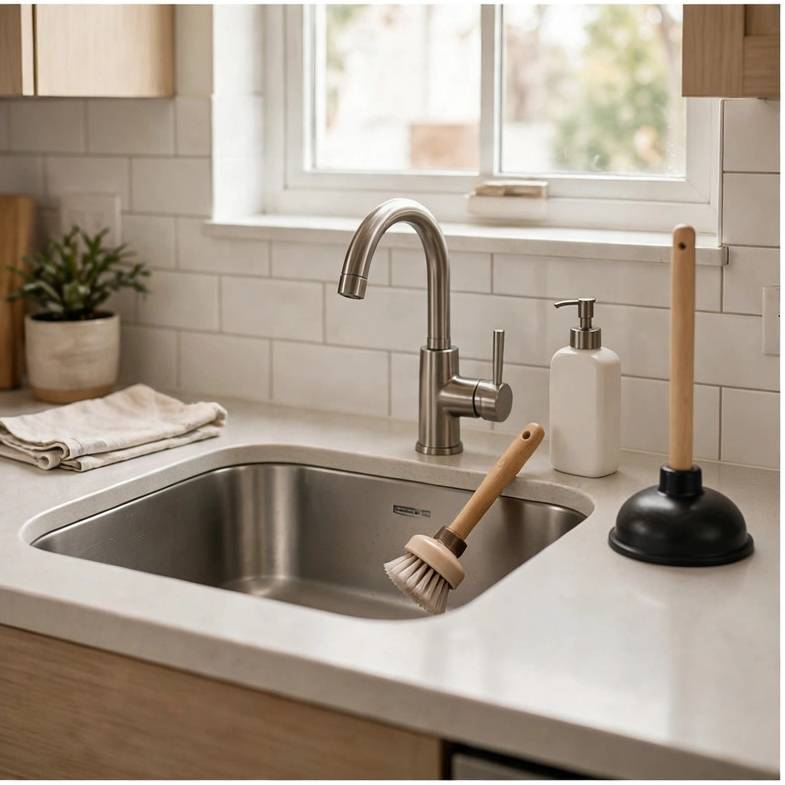
If the zip tool does not clear it, plunge. Use a cup plunger for sinks and tubs, not the flange kind made for toilets. Fill the basin with enough water to cover the cup, plug the overflow drain with a wet rag so you are not just pushing air, and give it 15 to 20 sharp thrusts. Plunger technique fails mostly because people do it gently. Do not be gentle.
For a slow drain that is not fully blocked, try an enzyme cleaner. Products with bacterial enzymes eat through soap scum and organic gunk over a few hours without touching your pipes. They cost about $10 and work best poured in before bed and flushed with hot water in the morning. They will not dissolve a solid hairball, but they keep a sluggish drain from becoming a standing-water drain.
The last resort before calling someone: a 25-foot hand-crank drain auger for about $25. Feed the cable into the drain while cranking the handle, and it either grabs the clog or punches through it. Retract slowly so you do not redeposit the gunk. This is a 30-minute job the first time and a 10-minute job every time after, and it handles most clogs a plumber would charge $150 to $250 to clear.
The chemical drain cleaner rules
Read this part twice, because this is where people get hurt or wreck their pipes.
- Never mix chemical drain cleaners. Mixing an acid-based cleaner with a bleach- or lye-based one can release toxic gas. If one product does not work, do not add a different one. Flush with plenty of water, wait, and move on.
- Wear gloves and ventilate. Lye-based cleaners can cause chemical burns on skin and blind you if they splash. Open a window, wear rubber gloves and eye protection, and pour slowly.
- Know your pipes. Repeated use of caustic cleaners can soften PVC and damage older metal pipes. If you have a septic system, heavy chemical use can kill the bacteria the system depends on.
- Do not pour chemicals into a disposal or a toilet. Disposals splash. Toilets and chemicals are a flooding risk with toxic water.
Garbage disposal: the hum of death
Safety first, non-negotiable. Before you touch anything near a disposal, unplug it under the sink or flip its breaker off at the electrical panel. Test that it is dead by flipping the wall switch. A disposal that turns on while your hand is inside it can sever fingers. This is not an exaggeration for effect. Unplug first, every time.
That humming sound with no grinding means the motor has power but the flywheel is jammed. The fix is mechanical, not electrical.
Step one: press the red reset button on the bottom of the disposal unit, underneath the sink. It trips when the motor overheats from a jam. Press it, wait five minutes, and try the switch.
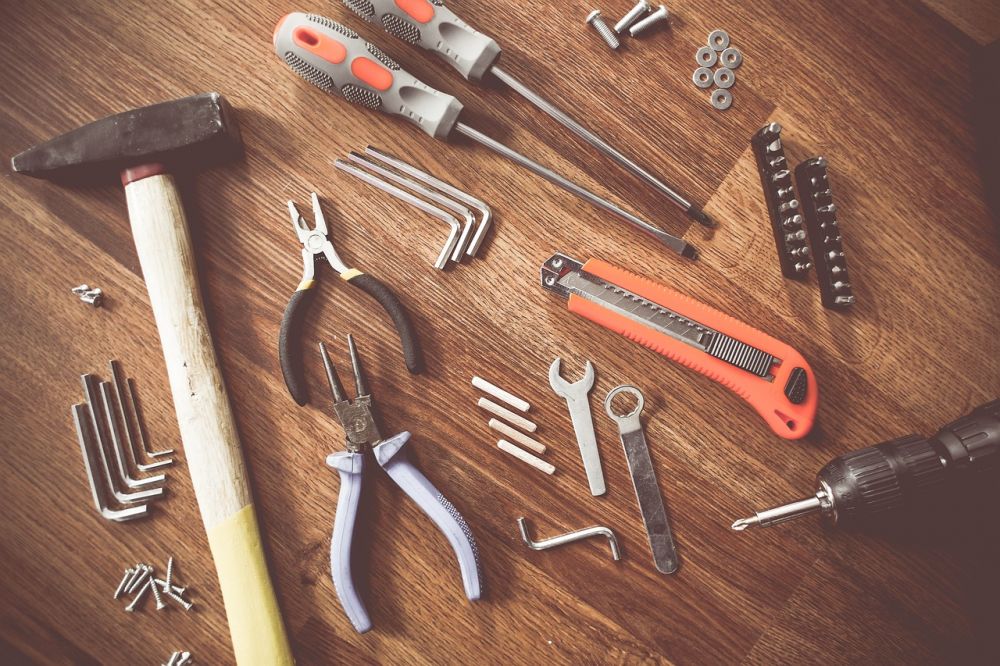
Step two: if it still hums, grab a 1/4-inch hex wrench ($2). There is a hex-shaped hole in the center of the bottom of the unit. Insert the wrench and work it back and forth to manually rotate the flywheel and break the jam free. Pull the wrench out, press the reset button again, restore power, and run cold water while you test it.
Use long tongs or pliers to pull out whatever was jammed. Never your hand. Jams come from fibrous foods like celery, starchy foods like pasta that turn to glue, grease that solidifies, and bones or pits that are too hard. Run cold water while grinding to keep grease moving.
If the disposal is over 10 years old, leaks from the bottom seal, or the motor smokes, stop fixing it. A new 1/2-horsepower disposal costs $80 to $150, and a pro install runs $150 to $250 on top.
Vacuums: suction loss is a clog, too
A vacuum that pushes dirt around is not broken. It is clogged somewhere in the air path, and the clog is almost always one of four things.
The brush roll. Flip the vacuum over. The roller brush is wrapped in hair and thread, guaranteed. Cut it free with scissors or a $5 seam ripper, pulling the hair off in strips. Do this monthly if you have pets. A brush roll that cannot spin is just dead weight.
The hose. Detach the hose and drop a broom handle through it, or shine a flashlight in one end while looking through the other. Socks, bottle caps, and toys live in vacuum hoses. Push the blockage through with the broom handle, never with a wire that can puncture the hose.
The filter. Wash the washable filters under warm water every one to three months and let them dry fully for 24 hours before reinstalling. A clogged filter chokes airflow exactly like a clogged hose. Replacement filters run $8 to $20.
The bin or bag. Empty the bin before it hits the max line and change bags at two-thirds full. A full bag is the most common cause of suction loss.
If the belt that drives the brush roll is stretched or snapped, replacement belts cost $5 to $10 and take 10 minutes with a screwdriver. Check your model's manual for the belt size. If the motor itself smells like burning or the vacuum shuts off from overheating after you have cleared everything, the motor is done. A replacement motor costs nearly as much as a new midrange vacuum, so do the honest math before ordering parts.
When it is not your job anymore
Call a plumber when: more than one drain is slow at the same time (the clog is in the main line, beyond a hand auger), water backs up into a different fixture when you run another one, or you smell sewage. Main-line snaking runs $150 to $400, so do not ignore the early signs.
Call an electrician if the disposal trips its breaker repeatedly after you have cleared the jam. That is a wiring or motor problem, not a clog problem.
Everything else, the zip tool, the plunger, the hex wrench, the seam ripper, costs under $25 total and handles the vast majority of clogs you will ever face. The clog always feels like an emergency. It is almost never one.