How to Fix a Running Toilet in 15 Minutes
If your toilet hisses, trickles, or refills itself when nobody used it, water is leaking from the tank into the bowl — silently, all day. The fix is usually a part that costs a few dollars and takes minutes to swap. Here is how to find the problem and fix it in order.
First, confirm it is actually running: the food coloring test
Do not guess at the cause. Put a few drops of food coloring (or a dark drink packet) into the toilet tank — not the bowl — and wait 15 minutes without flushing. If color shows up in the bowl, tank water is leaking past the flapper. That single test tells you exactly where to start, and it is the step most people skip.
Also take a quick look at the water level in the tank. There is usually a fill line marked on the inside of the tank or on the overflow tube. If water is sitting above that line or flowing into the overflow tube constantly, the fill mechanism is the problem, not the flapper.
Fix #1: Replace the flapper (the usual culprit)
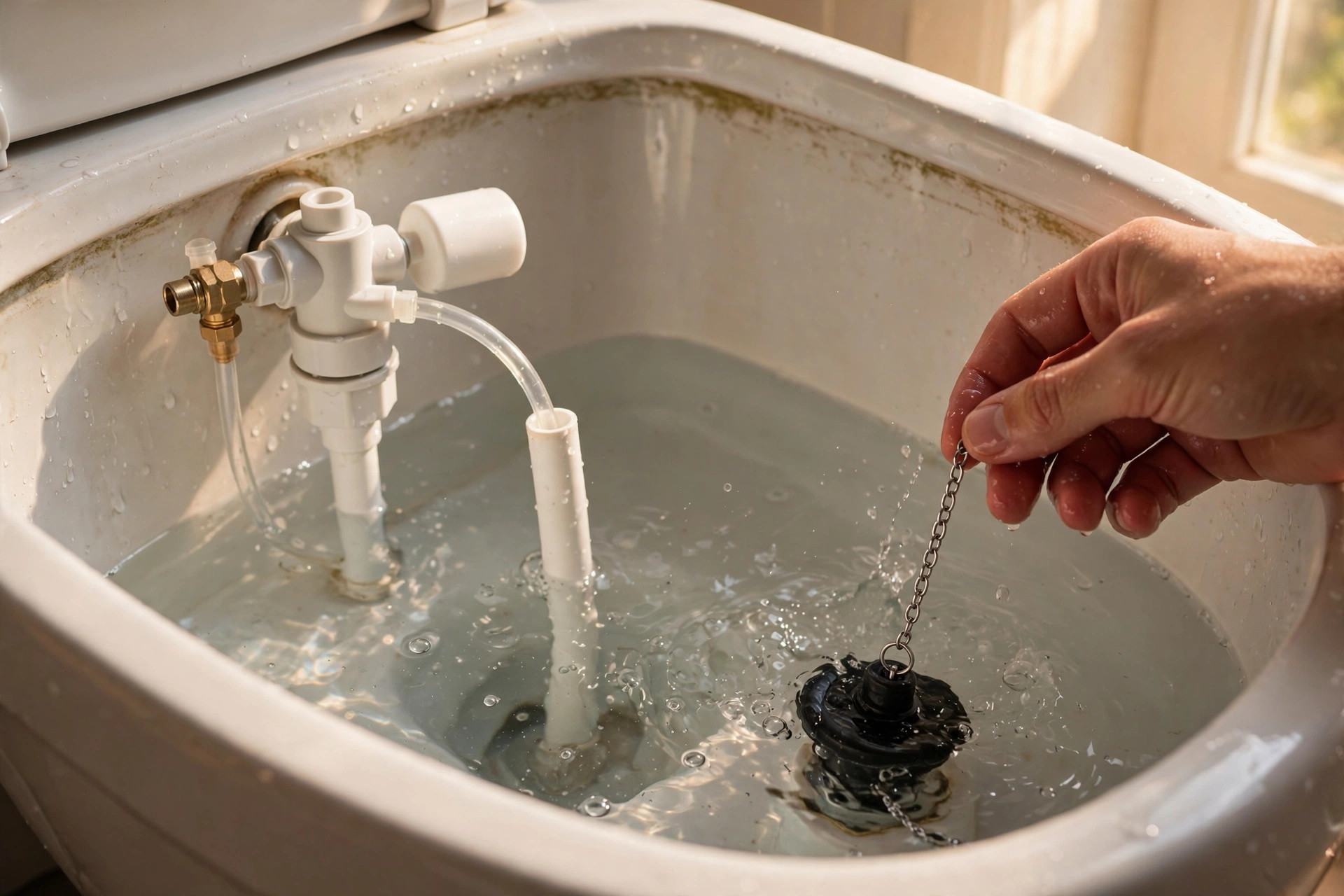
The flapper is the rubber disc at the bottom of the tank that lifts when you flush and seals the water back in afterward. Over time the rubber warps, gets slimy, or stops sealing — and water leaks through around the clock. This is the cause most of the time.
- Turn off the water: the small valve on the wall behind the toilet. Turn it clockwise until it stops.
- Flush the toilet to empty the tank. (It will not refill because the water is off.)
- Unhook the old flapper from the two pegs on the sides of the overflow tube and detach the chain from the flush handle arm.
- Snap the new universal flapper onto the pegs and hook the chain back on. A universal replacement costs a few dollars at any hardware store — bring the old one to match the size if you are unsure.
- Turn the water back on and let the tank fill. Wait a few minutes and listen. Silence means you fixed it.
If the toilet still runs after a new flapper, check the seat it seals against before buying anything else. Run your finger around the flush valve seat — the ring the flapper sits on. If it is slimy or crusted with mineral buildup, the new flapper cannot seal no matter how new it is. Wipe it clean with a cloth; for hard deposits, a plastic scrub pad used gently will smooth it without gouging the plastic. If the seat is cracked or deeply pitted, the seat itself needs replacing — still a cheap part, but a separate job from the flapper.
One more tip while you are in the tank: glance at the supply line and the tank bolts. If the supply hose looks cracked or the bolts are rusted and weeping, note it for a future fix. Catching those early is the difference between a $5 part and a flooded bathroom. If the toilet still runs after a new flapper and a clean seat, move to the next fix.
Fix #2: Fix the chain
The chain connects the flush handle to the flapper, and it needs a little slack — not pulled tight, not tangled. If the chain is too short or caught under the flapper, it holds the flapper slightly open and the toilet runs forever.
With the tank full, look at the chain. It should have some give when the handle is at rest. If it is taut, move the hook to a different link to add slack. If it is tangled or the extra links are bunching up and catching under the flapper, re-hook it so the spare links hang free without getting pinched. This costs nothing and fixes the problem more often than people expect.
Fix #3: Adjust or replace the fill valve
The fill valve (the tall column, usually on the left side of the tank) refills the tank after a flush. If it is set too high, water runs continuously into the overflow tube and down the drain — the toilet sounds like it never quite finishes filling.
- Find the adjustment: most modern valves have a screw or a clip on the float that sets the water height. Lower it so the water stops at the fill line on the tank or overflow tube.
- Flush and watch. The tank should fill to the line and then stop completely — no hissing, no trickling.
- If adjusting does not help, the valve itself is worn. Turn off the water, flush, unscrew the old valve from under the tank (keep a towel handy for drips), and install a new universal fill valve the same way. It is the same skill level as the flapper swap.
When to call a plumber instead
Most running toilets are a flapper or a float. Call a professional if you see any of these:
- Water leaking from the base of the toilet onto the floor, or the tank itself is cracked.
- The wall shut-off valve will not turn, spins freely, or leaks when you touch it.
- You replaced the flapper and adjusted the fill valve and the toilet still runs — the problem may be in the supply line or a seal you cannot see.
A running toilet left alone wastes enough water every day to show up on your water bill. Fifteen minutes and a cheap part now is the cheapest water bill you will ever pay.
When in doubt, call a licensed professional — some jobs are not worth the risk.