How to Save $500 in 30 Days Without a Second Job

Five hundred dollars in 30 days is about $17 a day — here is a week-by-week plan that gets there without a second job.
Do the daily math first
$500 divided by 30 days is about $16.70 a day. That number matters because it turns a scary monthly goal into a daily decision. You are not saving $500. You are finding $17 a day, thirty times.
Open a separate savings account or a labeled envelope before day one. Every dollar you free up moves there the same day. Money that sits in checking gets spent; money that moves is saved. This single habit does more work than any tip below it.
Week one: cancel and call
List every subscription and membership with a monthly charge. Streaming, apps, boxes, gym, cloud storage — all of it. Cancel everything you have not used in the last two weeks. Check bank and card statements for the last 90 days rather than relying on memory — the subscriptions you forgot are the ones costing you. Annual plans you can cancel for a prorated refund are worth the call; even a partial refund counts toward the goal. For an example, three forgotten subscriptions at $10 to $15 each is $30 to $45 back in your pocket this month alone.
Then make two calls: your internet provider and your phone carrier. Ask what cheaper plans exist and whether any promotions apply to your account. You do not need a script or a threat to leave. A calm ten-minute call often finds a lower rate, and any monthly reduction counts toward the $500.
Week two: the grocery reset
Food is where most budgets leak fastest. For one month, plan every dinner before you shop, shop with a list, and ban midweek top-up trips. Those small unplanned runs are where the real money goes.
Cook from what you already own for the first few days. Most kitchens hold a week of meals in the freezer and pantry that never get used because shopping is easier than planning. Eat down the stockpile, then buy only what the meal plan requires. A household that normally spends freely on food can often free $100 or more this way in a month.
Week three: sell three things
Walk through your home and find three items worth at least $30 each that you have not touched in six months. Electronics, tools, furniture, sealed hobby gear, brand-name clothes — list them on a local marketplace this week, priced to move.
Price for speed, not perfection. An item listed at a fair price today beats the same item listed at a hopeful price next month. Photograph in daylight, write an honest one-line description, and meet buyers in public places. Two or three quick sales can cover a third of your $500 goal by themselves.
Week four: defend the total
The last week is where most 30-day challenges die. The novelty is gone, the total looks good enough, and one celebratory dinner feels harmless. It is not harmless — it is how $410 finishes as $380.
Two defenses work. First, make the running total visible to one person; telling someone you are at $430 makes quitting at $430 embarrassing. Second, pre-plan a cheap celebration for day 31 — a favorite home-cooked meal, a free outing — so the finish line has a reward that is not spending.
All month: the 24-hour rule
Any nonessential purchase over $20 waits 24 hours. No exceptions, no debates in the store aisle. Put it on a list on your phone and check the list the next day. Most items will feel less urgent by then, and the ones that still matter can be bought deliberately.
This rule works because it separates the wanting from the buying. Impulse spending is fast; planned spending is slow. The 24-hour gap turns most impulses into nothing, and the savings show up as money you simply never spent.
Bank the wins the same day
Every time you skip a purchase, cook instead of ordering, or sell something, move that amount to savings immediately. Do not wait until the end of the week to total it up. Same-day transfers keep the scoreboard visible and stop freed-up money from dissolving into the next impulse.
Keep a running total somewhere you will see it — a note on the fridge, a phone widget, a sticky note on the bathroom mirror. If your bank allows nicknamed sub-accounts, label this one with the goal and the deadline. A label like 500 by day 30 turns an abstract number into a promise you can see. Watching $120 become $260 become $410 is the fuel that carries the last hard week.
Day 31: lock it in
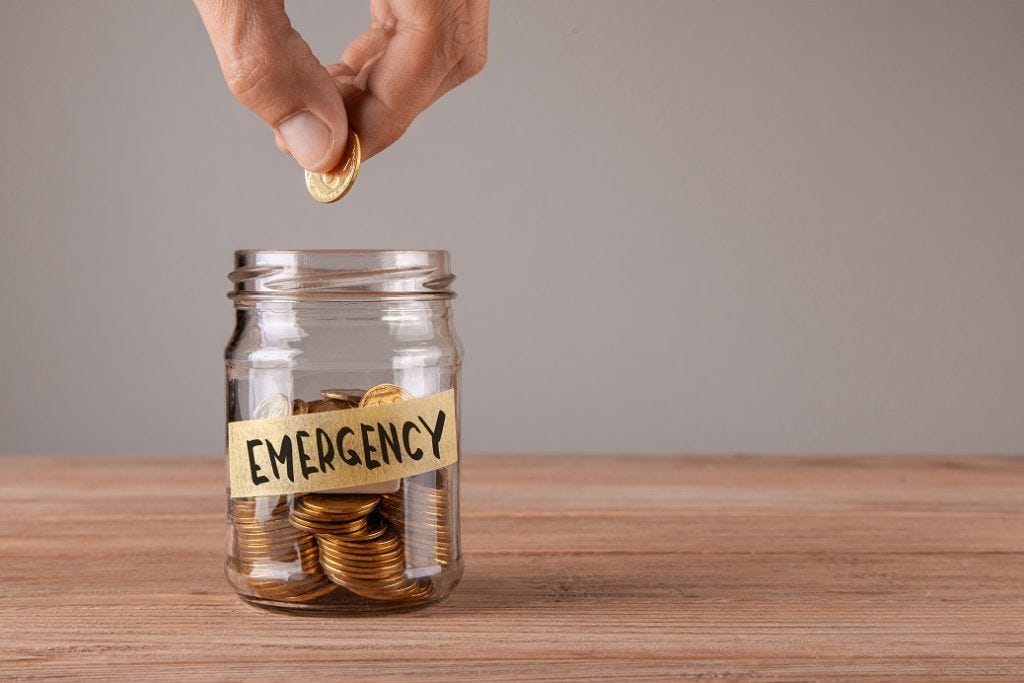
When the month ends, do not let the $500 slide back into checking. Decide its job now: starter emergency fund, a debt payment, or the first deposit toward a bigger goal. Money without a job gets spent; money with a job stays saved.
Then pick exactly one habit from the month to keep. The subscription audit, the meal planning, the 24-hour rule — keep the one that felt easiest, because the easiest one is the one you will still be doing in six months. One kept habit is worth more than a perfect month you never repeat.
Quick answers.
What if I am paid biweekly? Split the goal per paycheck: $250 saved from each of the two checks that land in the month. Move it the day the check clears.
What counts toward the $500? Anything that ends up in the separate savings pile: cuts, sales, skipped purchases, found money. If it is in the pile on day 30, it counts.
What if I fall behind mid-month? Recalculate the daily number on the remaining days and adjust. A plan that adapts survives; a plan that demands perfection gets abandoned.
This article is general education, not individualized financial advice.