The 72-Hour Emergency Kit Every Home Should Have
Seventy-two hours of supplies fits in one closet bin; this checklist tells you exactly what goes in it.
Why 72 hours
Emergency agencies generally suggest being ready to get through three days without outside help. That is the window where storms knock out power, roads close, and stores empty — and where a little preparation turns a crisis into an inconvenience. You are not preparing for the end of the world. You are preparing for the storm that keeps the power company busy until Thursday.
The whole kit fits in one large plastic bin in a closet. Build it once, refresh it twice a year, and forget about it in between.
Water and food first
Water is the non-negotiable item. Store one gallon per person per day — three gallons per person for 72 hours — plus a little extra for pets. Sealed jugs from the store keep for months; rotate them when you refresh the kit. Add a portable water filter or purification tablets as backup, because stored water is finite.
For food, pack what you would actually eat with no cooking: peanut butter, crackers, canned tuna or beans, dried fruit, nuts, granola bars. Include a manual can opener — an electric one is useless in an outage. Choose foods your household already likes; stress is not the time to discover you hate the emergency rations. Rotate food the same way you rotate water: when you buy fresh bars or cans for the pantry, move the kit's oldest into the pantry and put the new ones in the kit. Nothing expires unnoticed, and the kit costs almost nothing to maintain.
Light, power, and communication
Pack two flashlights and a headlamp, with spare batteries for each. A headlamp matters more than people expect — it frees both hands for everything else. Add a battery-powered or hand-crank radio for weather and emergency broadcasts when cell networks clog.
Keep a portable phone charger in the kit, charged and refreshed twice a year. In a real outage, your phone is your news, your flashlight, and your way to call for help. Protecting its battery is protecting your lifeline.
The go-bag version for car and work
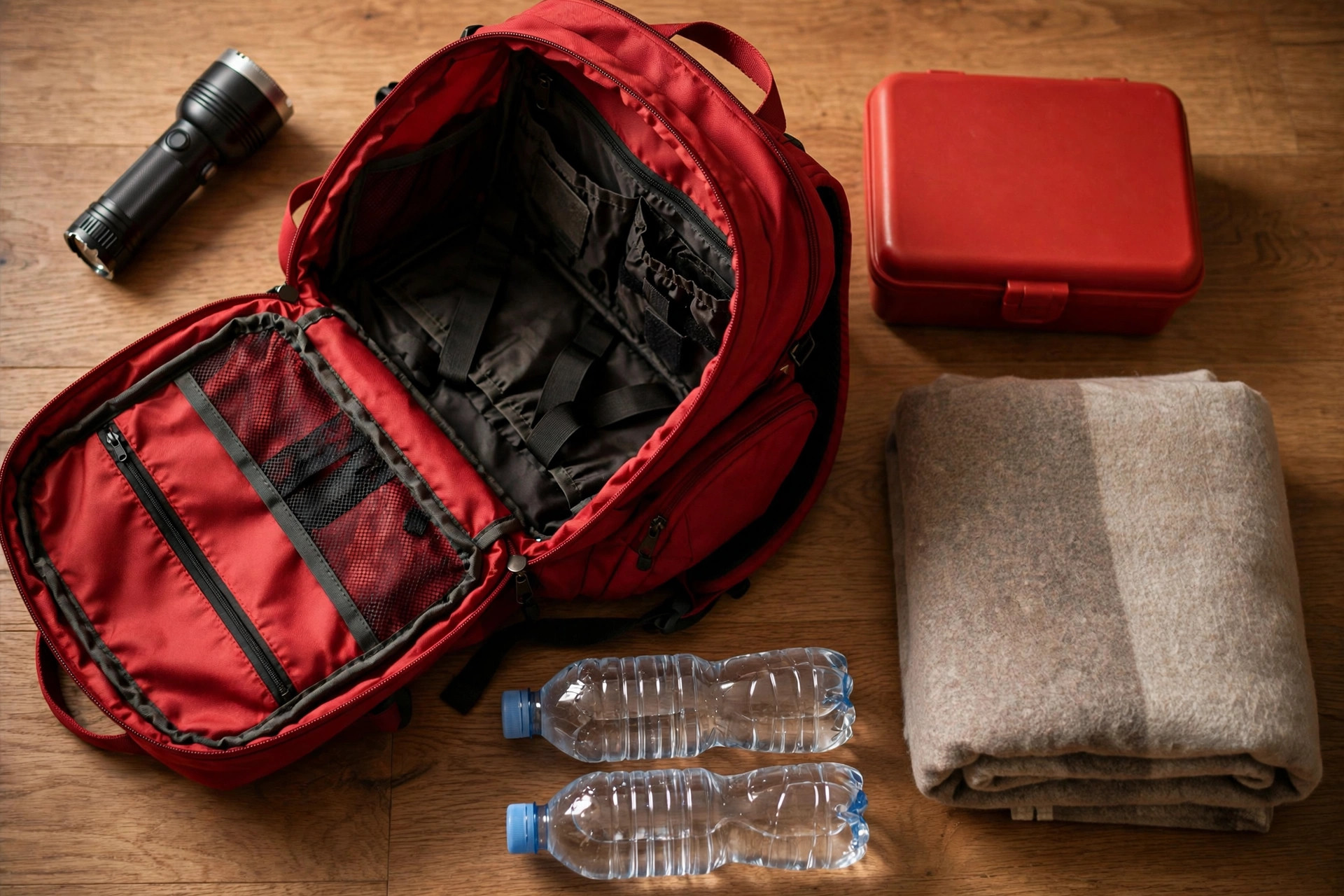
The closet bin covers home. A smaller go-bag covers everywhere else: water pouches, energy bars, a flashlight, a phone charger, a change of socks, and copies of key documents in the car trunk; a pared-down version in a desk drawer at work. Disasters do not check your location first.
Keep the car above half a tank as a standing rule. In evacuations, fuel is the resource that runs out first, and a full tank is a head start no kit can replace.
First aid and medications
A basic first-aid kit covers the likely injuries: bandages in several sizes, gauze, antiseptic wipes, tweezers, medical tape, pain relievers, and any allergy medication your household uses. Add a one-week supply of every prescription medication, rotated so it never expires unnoticed.
Include copies of prescriptions and a short list of medical conditions and allergies for each household member. In an evacuation or a shelter, that piece of paper can matter more than the bandages.
Documents and cash
Put copies of IDs, insurance policies, bank account numbers, and emergency contacts in a waterproof bag inside the kit. Originals stay where they are; these copies exist so a flooded home does not also mean a lost identity.
Add a few hundred dollars in small bills. Card readers fail in outages, ATMs go dark, and cash is the only payment method that works without electricity. Photograph the documents too and store the photos in encrypted cloud storage. Paper copies survive a dead phone; digital copies survive a flooded house. Small bills, because nobody can break a hundred when the registers are down.
Clothing, shelter, and sanitation
Pack a full change of clothes per person, including sturdy shoes — evacuations in flip-flops are miserable. Add blankets or sleeping bags, rain ponchos, and work gloves. A basic wrench can shut off gas or water if you know where your valves are; learn their locations before you need them.
For sanitation: a bucket with trash bags and ties works as an emergency toilet, plus hand sanitizer, wet wipes, and feminine supplies as needed. Unpleasant to think about, miserable to improvise.
Kids, pets, and the refresh schedule
For kids, add comfort items, diapers and formula if needed, and a written note with out-of-town contact numbers — children old enough to read should know who to call if phones die. For pets, pack three days of food, water, a leash, and vaccination records; many shelters require them.
Refresh the kit twice a year — tie it to daylight saving time changes so you never forget. Swap the water, check food dates, recharge the battery pack, and update medications and documents. A kit you built in 2024 and never touched is a box of expired hope.
Quick answers.
Where should I keep the bin? Somewhere reachable in the dark: a hall closet, near the front door, or the garage — not buried behind holiday decorations. Everyone in the household should know the spot.
What about refrigerated medications? Keep a small insulated bag and ice packs in the freezer as part of the kit, and ask your pharmacist about safe temperature ranges. Plan this before an outage, not during one.
How is this different from a go-bag? The bin shelters you at home; the go-bag gets you out the door. You want both: the bin for riding out a storm, the bag for leaving fast if officials say go.
This article is general education, not individualized financial advice.