The 24-Hour Rule: How to Stop Impulse Spending Without Feeling Deprived

Impulse control works better as a pause than a ban. Match the waiting period to the price, then decide with a clear head instead of fighting every want.
You've done it this week. We all have. The thing in the cart, the thing on the shelf, the thing in the ad that showed up at exactly the wrong moment. Your finger hovers over "buy now" and some part of your brain has already decided this is happening.
The problem isn't willpower. Willpower is a terrible tool — it works for about twenty minutes and then your brain goes back to wanting the thing. The problem is timing. Almost every impulse purchase feels urgent because your brain confuses "I want this right now" with "this will be gone if I don't act now." Nine times out of ten, it won't be.
The 24-hour rule breaks that confusion with the simplest possible mechanism: when you want something you didn't plan to buy, you wait 24 hours before buying it. That's the whole rule. Here's how to make it actually stick.
Why 24 Hours Changes Everything
Impulse purchases run on emotional momentum. You see the thing, dopamine fires, and the desire peaks fast — usually within the first hour. After that it decays. Sleep resets it almost entirely.
Think about the last five things you bought on impulse. How many do you still care about? The running shoes you wore twice. The gadget still in the box. The thing you bought at 11pm and felt weird about at 8am. The regret you feel the next morning is the rule doing its job — it just arrived too late. Waiting 24 hours moves the regret to before you spend the money, where it's useful.
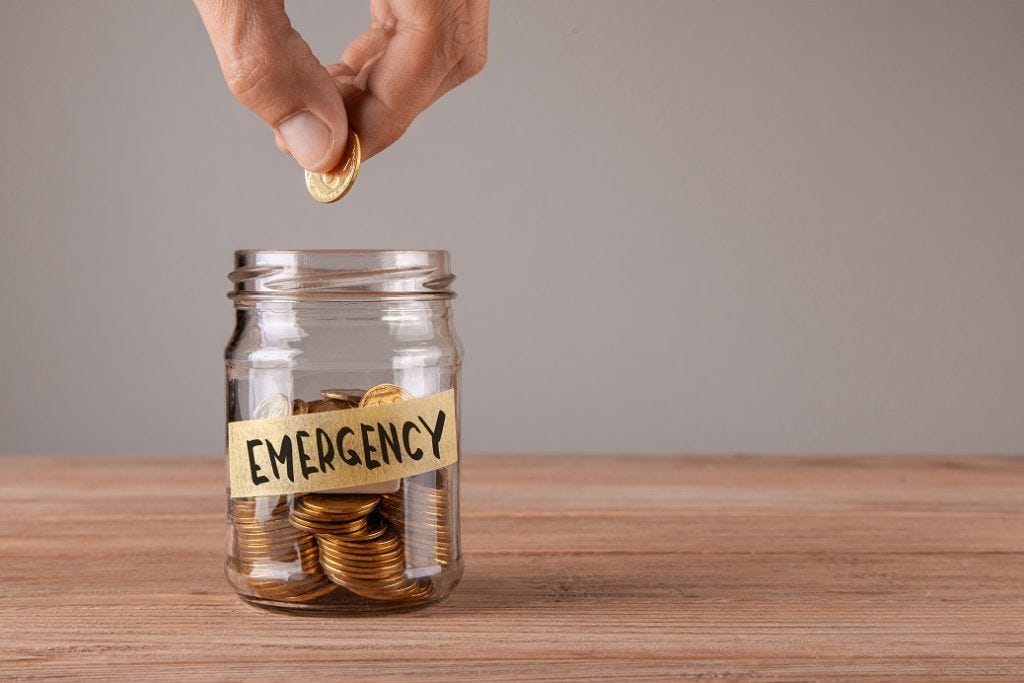
Run the numbers: if you stop yourself from making just two $40 impulse buys a month, that's $960 a year. Still feels abstract? That's a full emergency-fund month for a lot of people. The rule doesn't feel like saving $960. It feels like nothing, because the purchases never happened. That's why it works — it operates in the land of things you never bought.
The Exact System (It's Three Steps)
1. Keep a "want list," not a cart
When the urge hits, don't argue with yourself. Just write the item down. A notes app on your phone works. So does a scrap of paper. Record the item, the price, and today's date. The physical act of writing it down does two things: it acknowledges the desire (so your brain stops screaming) and it creates the pause.
Online, this means: leave the tab open or screenshot it. Do not check out. Do not "save for later" in the store's cart — that feature exists to pull you back, and it works.
2. Set the timer and walk away
For purchases under $100, wait 24 hours. For purchases over $100, wait 72 hours — call it the 3-day rule. For anything over $500, wait 30 days. Scale the wait to the stakes. A $12 phone case doesn't need a month of deliberation. A $700 espresso machine does.
The key: the timer is non-negotiable. "This sale ends tonight" is the oldest trick in retail. If the deal is real, there will be another one. And here's a secret: if you put your email in and abandon the cart, many stores send you a 10–15% discount code within 48 hours. The wait can literally make the thing cheaper.
3. Revisit with one question
When the time is up, open your list and ask: "Am I still excited about this, or did I just forget it existed?" If you genuinely forgot about it, delete it. That happens a lot — items dying of neglect tells you everything about how badly they were "needed."
The Exceptions That Keep It From Feeling Like a Diet
A rule that covers everything will last about four days. So define what's exempt, in advance:
- Replacements, not additions. Your phone charger broke? Buy one. That's not impulse spending, that's maintenance.
- Planned purchases. If it's on your budget or shopping list, it was already decided. The rule only applies to unplanned wants.
- Consumables under a threshold. A $6 coffee doesn't need a committee. Set a "no questions asked" amount — say $20 — and anything under it is free game.
The point of the exceptions is that the rule stays light. Nobody sticks with a system that makes a grocery run feel like a moral event. You're targeting the $60–$200 surprise purchases that quietly drain a few hundred dollars a month, not policing lattes.
What to Do When You Keep Breaking It
If you keep "failing" the rule, the rule isn't the problem — your trigger environment is. Three upgrades, in order of impact:
First, delete saved payment info. Having your card auto-filled turns buying into a one-click reflex. Making yourself type in 16 digits creates about 45 seconds of friction, and friction is the whole game. This single change stops more impulse buys than any mindset shift.
Second, unsubscribe from the marketing emails. Every promotional email is a stranger walking into your house and shouting about a sale. You wouldn't allow that in person. Your inbox should have the same boundary.
Third, name your actual goal. "Stop spending" is not a goal. "I want $3,000 in an emergency fund by December" is a goal. When the $89 jacket is sitting in your cart and you can picture the $3,000 number dropping to $2,911, the abstract urge loses to the concrete number. Almost every time.
The 24-Hour Rule Isn't About Deprivation
Here's what actually happens after a month of this: you buy fewer things, and you enjoy the things you buy more. The stuff that survives the 24 hours tends to be stuff you genuinely wanted, and buying something you genuinely wanted feels great. No guilt. No next-morning regret. The rule doesn't make you spend less by making you miserable — it makes you spend less by filtering out the purchases that were never going to make you happy anyway.