Cash Envelope Budgeting for Beginners: Does It Still Work?
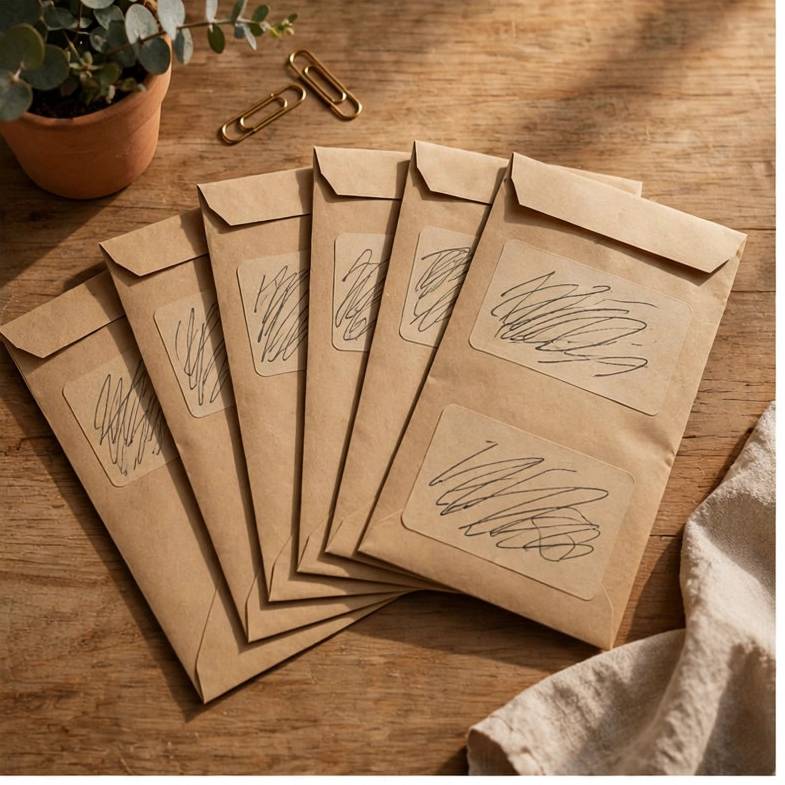
Cash envelopes still solve one useful problem: they make a spending limit visible. A digital hybrid can create the same boundary without forcing you to carry cash.
Cash envelope budgeting sounds like something your grandmother did. Because it is. And your grandmother was probably better with money than your budgeting app is.
The system is dead simple: you put cash in labeled envelopes — Groceries, Gas, Dining Out, Fun Money — and when an envelope is empty, you stop spending in that category until next month. No spreadsheets. No syncing. No "pending transactions" mystery. The physical cash does the thinking for you.
The obvious question: in 2026, when you pay for everything with your phone, does a system built on paper envelopes still work? Mostly, yes — with some honest modifications. Here's the unvarnished version.
Why It Works (It's Your Brain, Not the Envelopes)
Cash hurts more to spend. That's not a metaphor — spending physical cash genuinely registers more strongly in the brain than swiping a card. Card payments blur into one abstract number; handing over three twenties for groceries is a concrete event you feel. Researchers call this the "pain of paying," and it's the entire engine of the envelope system.
The second mechanism is even simpler: a hard stop. When the Dining Out envelope is empty on the 22nd, the decision is made for you. No willpower required, no "I'll make it up next month" bargaining. Digital budgets let you go over with a sad red bar and no consequences. An empty envelope has consequences — they're immediate and physical.
Who benefits most: people who look at their bank balance and think "I have no idea where it went." If your money evaporates between paychecks, the problem is rarely income. It's visibility. Envelopes force visibility.
Setting It Up: The First Month
Step 1: Pick 4–6 categories. Don't envelope your rent — fixed bills on autopay are fine where they are. Envelopes are for the variable spending that leaks: Groceries, Dining Out, Gas/Transportation, Personal/Fun Money, Household. Five is the sweet spot. More than that and you're managing a filing cabinet.
Step 2: Set the amounts from real data. Look at last month's spending (bank app, three minutes). Spent $620 on groceries? Your envelope gets $600 — slightly less, not aspirationally less. Setting the Dining Out envelope to $50 when you actually spend $300 is how systems die in week two.
Step 3: Withdraw the cash on payday. Say your five envelopes total $1,100 a month and you get paid twice. Withdraw $550 each payday, split it across the envelopes. What's left in checking covers the fixed bills. That's the whole operation.
A concrete example for a $3,200/month take-home:
- Groceries: $500
- Dining out: $150
- Gas: $160
- Personal/fun: $120
- Household/misc: $70
Total in envelopes: $1,000. Fixed bills (~$1,800) stay in the bank. The remaining $400 goes to savings before you touch anything else. When the $120 fun envelope is empty, fun is over until next payday. Brutal. Effective.
The Honest Problems With Cash in 2026
Let's not pretend it's 1995. Cash has real friction now:
- Online shopping doesn't take envelopes. If half your spending is Amazon and subscriptions, pure cash gets awkward fast.
- Cash is easier to "borrow" from. Raiding the grocery envelope for concert tickets takes three seconds and leaves no trail.
- No paper trail. Lose the envelope, lose the money. There's no fraud protection on a twenty-dollar bill.
- ATM fees and bank runs. If your bank charges $3 per out-of-network withdrawal, the system has a leak.
None of these are fatal. But they mean the pure-cash version works best as a training phase, not necessarily a forever system.
The Hybrid: Digital Envelopes That Keep the Psychology
You can keep every benefit of envelopes without carrying a wallet full of cash. The trick is recreating the two things that make it work: separate piles and a hard stop.
Option A: Separate checking accounts. Many online banks let you open multiple free checking accounts. Label them Groceries, Fun, Gas. Transfer the budgeted amount in on payday. Spend with the debit card tied to each account. When the Groceries account hits zero, you're done — and unlike a budget category, you literally cannot overspend without transferring money in, which forces a conscious decision.
Option B: A prepaid card per category. Load $150 onto a prepaid card labeled Dining Out at the start of the month. Same hard stop, works online and in stores. Watch for reload fees — some cards charge them, which eats the benefit.
Option C: One account, tracked categories. The weakest version, but better than nothing. Some banking apps let you set spending targets per category with alerts. The hard stop is missing, but the visibility is there.
Honest recommendation: do 2–3 months of real cash envelopes first, even if it feels old-fashioned. It retrains your spending instincts faster than any digital version. Then graduate to the hybrid that fits your life. Most people who try the cash version for 90 days either keep it or keep the habits it built.
Does It Still Work? The Verdict
Yes — not because cash is magic, but because the system solves the actual problem, which is that most budgets are invisible until they're broken. Envelopes, cash or digital, make every spending category visible before it's empty instead of after. The format matters less than the mechanism: separate the money, cap the categories, let the empty envelope make the decision.
If you've tried three budgeting apps and quit all of them, try the thing with no login screen. Sometimes the oldest tool in the drawer is the one that fits your hand.